Planning flatbed hire in Barnet
A long load changes the whole plan for a Barnet delivery. Before you choose a stopping place outside a house, shop or site, measure the longest item and compare it with the deck length of each dropside category. A 3 metre bed suits shorter boards and fencing, a 4 metre bed gives more room for timber and pipe, and a representative 6 metre lorry deck takes longer lengths. The deck you choose then decides where you can stop, how long unloading takes and when you need to be back.
This guide is for householders moving materials, trades collecting supplies and businesses making planned deliveries. It covers choosing a vehicle, checking your licence against weight, restraining and unloading safely, and the Barnet signs and restrictions worth checking before you set off. Every figure here describes a representative category, not a particular vehicle, so confirm the allocated vehicle, terms and availability directly with the supplier when you book.
Match deck length to the longest item first
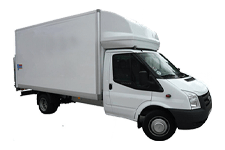
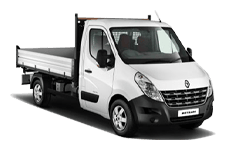
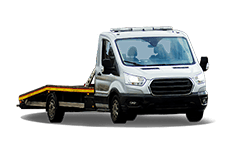
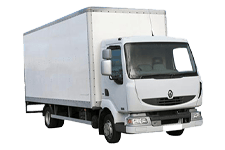
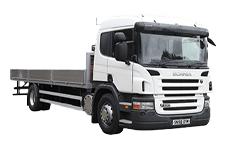
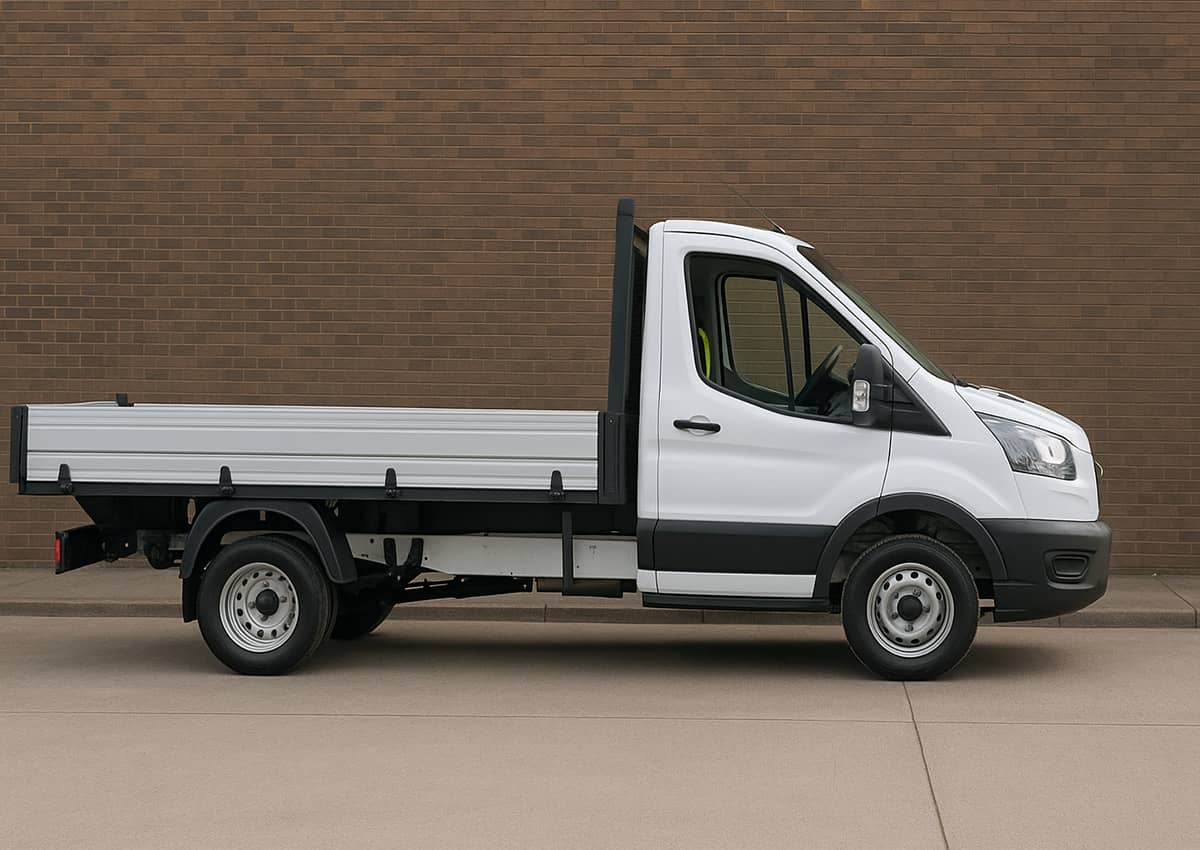
Start with a tape measure rather than a vehicle name. Record the length, width and weight of the longest and heaviest items, including packaging and pallets. Representative dropside categories run from about 3 metres of bed length on a compact van, through around 4 metres by 2 metres on a longer van, to roughly 6 metres by 2.35 metres on a 7.5 tonne lorry. Treat these as starting points and ask for the allocated vehicle's actual body dimensions before you commit.
If a load would project beyond the rear or sides, the official guidance on overhanging loads sets out marking rules and situations where advance notice is needed, depending on the measured projection. Often the simpler answer is a longer bed. A longer vehicle, though, needs a longer stopping place at the Barnet end, so size the vehicle and the kerbside space together rather than one after the other.
Sources: Nationwide Hire UK: 3 metre dropside, Nationwide Hire UK: 4 metre dropside, Nationwide Hire UK: 7.5 tonne dropside, DVSA and DfT: overhanging loads on vehicles
Which dropside suits which job
For a householder collecting fencing panels, or a trades customer picking up boards and bagged materials, the 3 metre dropside is the compact choice where a larger vehicle would be awkward. The 4 metre version adds deck length for long timber, pipe and landscaping materials and is still a light commercial vehicle, though its plated weight needs checking against your licence like any other.
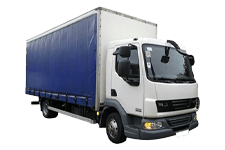
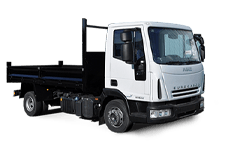
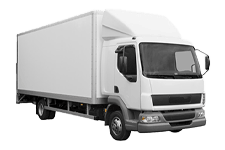
The 7.5 tonne dropside suits scaffolding, multiple pallets and larger machinery when the driver holds C1 and the route and unloading plan suit a lorry. Ask the supplier about any operator or commercial-use conditions. Where there is no forklift or dock at the destination, ask about a dropside with a tail lift. Enclosed Luton, curtainside and tipper categories are better for weather-sensitive goods, forklift side access or loose materials respectively.
Sources: Nationwide Hire UK: 3 metre dropside, Nationwide Hire UK: 4 metre dropside, Nationwide Hire UK: dropside with tail lift, Nationwide Hire UK: 7.5 tonne dropside
Payload, gross weight and your driving licence
Gross vehicle weight, also called maximum authorised mass, is the most the vehicle may weigh when loaded, and it is normally shown on the plate or sticker. It is not the amount you can carry. Everything on board counts towards it: the vehicle, the driver and passengers, and the goods with their pallets and packaging, so your payload must cover the goods plus pallets and packaging. A compact dropside published at around 1,100 kg of payload is a useful comparison, but only the allocated vehicle's figures count.
A standard car licence (category B) generally covers vehicles up to 3.5 tonnes maximum authorised mass. Above that and up to 7.5 tonnes, category C1 is generally needed. Check the categories on each driver's current licence against the plated weight, and ask about any age or experience conditions the supplier applies. On multi-drop runs, recheck how weight is spread after each drop, and use a weighbridge if you are unsure.
Sources: GOV.UK: vehicle weights explained, DVSA: HGV overloading basics, GOV.UK: driving licence categories, Nationwide Hire UK: 3 metre dropside
Restraint and side loading on an open deck
Dropsides make loading from the side easy, which is their main benefit, but a load cannot rely on its own weight or friction to stay put. Official guidance says the securing system must suit both the load and the vehicle, and that the platform, body, anchorage points and weight limits should be checked before loading. Sheeting and rope hooks are not load-restraint anchor points.
Before collecting, ask which rated anchorage points the allocated vehicle has and whether straps or other restraint come with the hire, since that should not be assumed. Bring enough rated straps for the job, keep heavy items low and against the headboard where one is fitted, and use friction matting or chocks where the load could shift. Lower and raise sides with a clear area around you, and never stand where an unrestrained item could fall.
Sources: DVSA: securing loads on HGVs and goods vehicles, DVSA: load securing basics, DVSA: ways to secure a load
Tail lifts and unloading at the destination
A dropside with a tail lift can help with palletised or wheeled goods at an address with no loading dock, provided the conditions suit it. The tail-lift rating and the vehicle payload are two separate figures, so confirm both, along with platform size and whether a pallet truck can be used safely on it.
Health and safety guidance says loading areas should be clear and level, the vehicle should stand as stably as possible and the unloading method should be agreed in advance. For a Barnet driveway or kerbside, that means checking the slope, the surface under the lift and who will receive the goods before you leave. A sloping pavement or soft verge can make a lift or pallet truck unsafe even when the rating is ample.
Sources: Nationwide Hire UK: dropside with tail lift, HSE: safe loading and unloading
Loading bays and overnight waiting in Barnet
Barnet Council guidance says that where a loading place has a time limit, or is only for goods vehicles, the sign will show it. The sign at the exact spot is the rule, not a painted box or what other drivers are doing. Ask the receiving household or business to photograph it and send the bay length before you load.
Loading is not parking: a bay is for moving goods, not leaving the vehicle. Do not read any observation or grace period as permission to stay. The same guidance says vehicles weighing over 5 tonnes cannot wait overnight between 6.30pm and 8am, so a 7.5 tonne job that overruns needs a lawful place to stand or a same-day return.
Final approach: heavy-vehicle and width restrictions
Barnet Council notes that some residential roads are unsuitable for large and heavy vehicles, so their use is prohibited at all times or at certain times. It also uses width restrictions on some streets to stop them being used as cut-throughs while buses keep moving. A satnav shortcut that suits a car may lead a wide van or a dropside lorry straight into one of these.
Plan the last mile from the main road to the stopping place using the allocated vehicle's width, height and weight. Street imagery can be out of date, so read the signs on the approach, including any bus gates or other restrictions they show. Timed restrictions matter for early starts and late returns, so fit your collection and unloading window around them.
Sources: Barnet Council: vehicle restrictions and enforcement
Collection, handover and return
At collection, walk round the vehicle with whoever hands it over. Read the plate for maximum authorised mass, check the bed, sides, hinges and catches, locate the rated anchorage points and record existing damage in writing or photos. If a tail lift is fitted, ask for a demonstration and the operating instructions before you drive away.
Confirm the practical terms directly with the supplier: hire period, return time, mileage, deposit, insurance cover, fuel and what restraint equipment is included. Other companies' published terms can suggest questions, but only your booking documents apply. Build the return time around unloading as well as driving, because a long load at a tight kerbside can take longer to handle than to deliver.
Sources: Third-party reference: Nationwide Hire UK terms and conditions, GOV.UK: vehicle weights explained, HSE: safe loading and unloading